Welcome to Flightinfo.com

  • Register now and join the discussion
  • Friendliest aviation Ccmmunity on the web
  • Modern site for PC's, Phones, Tablets - no 3rd party apps required
  • Ask questions, help others, promote aviation
  • Share the passion for aviation
  • Invite everyone to Flightinfo.com and let's have fun

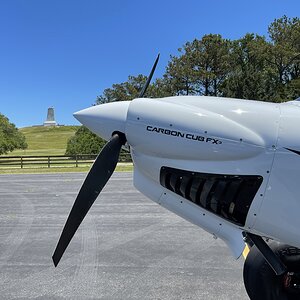
MOD Upgrading the ignition backup battery in a Carbon Cub E/FX-3 (EarthX ETX104)

Welcome to Flightinfo.com

  • Register now and join the discussion
  • Modern secure site, no 3rd party apps required
  • Invite your friends
  • Share the passion of aviation
  • Friendliest aviation community on the web
Are you really going to fly this plane knowing you're ignition backup is now compromised? You have no way of charging it, nor your starter battery.

Given that the situation is entirely hypothetical I shall make the following assumptions -

EarthX Main battery was not discharged to cut off voltage
The AGM ignition battery was not damaged by deep discharge
The alternator fault was located and fixed
The engine was started with my jump pack

I would then run at low rpm on ground to charge both batteries. I would monitor battery charge current and voltage and depart when I thought it safe. I do not consider your statement "You have no way of charging it, nor your starter battery" to be valid.

In over 450 FX-3 hours I have not had an alternator failure, nor have I deeply discharged the main battery, nor have I needed the emergency ignition battery. The probability of two alternator failures on the same day seems statistically remote as long as the original fault was identified and corrected. (I do have a spare alternator that I plan to carry on long trips.)

If the alternator keeps working the battery charge state is of no significance. I'll fly out from an austere/remote landing site with marginal battery charge rather than run out of gas charging them.

Yes - This discussion should be moved. It does not belong in a thread about about EarthX STC.
 
I moved multiple posts out of the EarthX STC thread into my MOD thread to discuss some of the recent concerns, recommendations, etc.

Given that the situation is entirely hypothetical I shall make the following assumptions
I think your hypotheticals are fair. It's not putting the scenario into doomsday, just wanted to know how you'd handle an off airport landing to address the scenario of having to use the backup ignition battery. Seems like a reasonable plan.

FYI - in my days of Air Force Pilot Training we did these scenarios every day as part of our training. Random students getting questioned how they would handle the emergency scenario.
 
Given that the situation is entirely hypothetical I shall make the following assumptions -

EarthX Main battery was not discharged to cut off voltage
The AGM ignition battery was not damaged by deep discharge
The alternator fault was located and fixed
The engine was started with my jump pack
In general, as far as I can tell, it is not possible to "jump start" a lithium battery such as the ETX-900 as the internal resistance of a deeply discharged Lithium battery will be very very low resulting in such a high charging rate that either the BMS will trip and/or permanent damage will be done to the battery (I have read of fires and worse on reddit). The EarthX documentation says:
If below 13.28V, the battery needs to be charged prior to an engine start attempt with an appropriate charger. Jump starting your battery in this situation is not recommended for it can damage it. Use a plug-in charger to safely and slowly bring the voltage back up to the appropriate level.
The best thing I can think of is that the main battery has enough charge left to power the left ignition, so you can hand-prop the engine.

I would then run at low rpm on ground to charge both batteries. I would monitor battery charge current and voltage and depart when I thought it safe. I do not consider your statement "You have no way of charging it, nor your starter battery" to be valid.
If the main battery were completely discharged, then you would have to disconnect the ground terminal for 60 seconds to reset the BMS so that it would accept a charge. So if there is enough charge in the ignition backup to hand-prop, and hopefully the alternator field will not trip continuously, you can then charge the main battery with the engine at near idle to limit the amount of electrical power generated and start charging the AGM battery (which will take ~22 hours to fully charge). Once the main battery current has started to drop from the initial value after engine start, I would consider flying.

If the alternator keeps working the battery charge state is of no significance.
This is not true - according to what I have discovered so far, a completely dead ETX-900 will try to draw more than 80 Amps, which is much more than the alternator, fuses, and breakers can handle.

I'll fly out from an austere/remote landing site with marginal battery charge rather than run out of gas charging them.
I agree - but it does bring up the question of if we are flying with Lithium main batteries, should we be carrying a solar charger (slower but safe for the batteries) rather than a jump pack?

Yes - This discussion should be moved. It does not belong in a thread about about EarthX STC.
I think that this discussion on the behavior of EarthX and other Lithium main batteries when discharged is on topic. I will be looking into getting one of the Optimate solar chargers and a small panel to carry instead of a jump pack.
 
I have hand started A65 and C85 engines many times. I doubt I could hand start the IO-360.

It's all hypothetical anyway. It would be almost impossible to get into the proposed situation with proper monitoring and alerting of alternator and/or battery current. I have both.
 
In general, as far as I can tell, it is not possible to "jump start" a lithium battery such as the ETX-900 as the internal resistance of a deeply discharged Lithium battery will be very very low resulting in such a high charging rate that either the BMS will trip and/or permanent damage will be done to the battery

Interesting point. However I don't want to jump start the battery. I want to jump start the engine.

With a deeply discharged LiFePO4 main battery it may be appropriate to disconnect the battery and pull alternator field and main breakers before attempting a start with the jump pack.

That start attempt would probably best be done with R IGN on EMER unless that battery was fully discharged.

If the engine starts, the jump pack can be disconnected and the engine should continue to run on R IGN.

Now main battery can be connected and, if not discharged to cutoff, I'd close alternator breakers briefly and check for charging current.

If there is any lesson to be learned here it is that in-flight monitoring of alternator and/or battery current is essential. That can best be done by alerting for negative battery current, or for alternator current less than a small positive value, or preferably for both.

My, as delivered, FX-3 had neither of those alerts. It now has both.
 
Last edited:
I saw a video with Kevin Quinn a year or two ago hand propping a FX-3. I think it took 80'something attempts but it worked.

 
Never hand prop with a cap on your head! If engine starts and the cap comes off it may be sucked into the prop and you may be tempted to reach for it.
 
Was hoping to fly today but winds came out of nowhere so I did a ground run. Data attached as I know @Cactus Charlie likes his data. YouTube video of engine start and then runup below. Here is the summary:

Engine start peak amps 1.4 which tapered down to 0.9. Battery is likely fully charged and all I've done is ground runs. It has not been on any charger.

Engine runup showed the flow reverse (decimal at bottom right is flow indicator, on vs off) so with R ignition powered I showed 1.0 amps flowing out of the battery.

I'll leave the right forward panel off for a flight or two to monitor the mount setup to ensure it's secure. Otherwise, this is done.


Attachments

Got an hour flight in yesterday after far too long, some of the delay due to this mod. Ground ops I never saw over 0.9A and nothing has been on a charger and it's been sitting for weeks. The starter battery was weak but also probably cold soaked as we've been down in single digits here in VA overnight and finally warming up. It was 35 OAT yesterday afternoon when I went to fly.

The starter battery didn't turn the prop over on the first try and I forgot to do the winter ops recommendation for EarthX to turn on pitot heat for 30 seconds to get the starter battery internals warmed up (generate heat from demand). The second start attempt turned over and started fine. I can't remember exactly but the amps showed 20 I think and stabilized around +14. It seemed the starter battery was the demand on the alternator most of the flight.

What was interesting was as the flight progressed the amps slowly walked down as expected as the starter battery charged but the ignition backup battery amps started to walk up and peaked at around 1.2. That was the highest observed during the flight, it was typically stable at around 0.9 to 1.0. Keeping in mind the hall effect sensor is vibrating from the engine running as I flew the entire hour at 24 squared to ensure condensation burned off from sitting for too long.
 
Houston - we have a problem!

So I haven't flown since July after taking care of a family member and then going on a RV trip. The only battery I put on a charger was the starter battery. Tonight was the night for the post condition inspection flight and taxied out and did the run up. R IGN, EMERG BATT ON - ENGINE QUITS. I caught it fast enough so the engine remained running. I repeated it again just prior to shutdown.

Prior to engine start, MASTER ON both starter and ign backup volts show 13.2. All looking normal. Engine crank was weak, it's been off the charger for a week, not thrilled about that, but it is what it is, engine started and off I went. AMP draw was approximately 18A which is lower than I typically see so the time on the charger seemed to still be effective.

So what is odd here is the ETX-104 showed no signs of weakness, i.e. the voltage at 13.2 seemed normal. But it could not handle any load on it.

As it was late in the evening I put the plane to bed and came home. I'll pull the panel off another day as I want to put a voltmeter on the battery and see if it matches the 13.2V reading or if for some reason the IGN B/U battery is reading the starter voltage (main bus voltage) instead of the IGN battery voltage.

I have a PowerSonic POS on the way but will be watching for this new release supposedly coming from @earthxbatteries and will also contact them to see if I can get a credit for this bad battery that was installed just months ago.

No breakers were popped, all seemed good. The question is why is there no indication of a weak battery. This was almost identical to @Tsquared's situation with his PowerSonic with the voltage showing normal and then when testing R ignition it dropped like a rock. I'm not confident in the voltage reading we're seeing for the IGN B/U battery based on his case and now mine.

The image below shows volts 2 (ign bu). Click image for full screen. Data file attached as well.

etx104.jpg
 

Attachments

Your experience is a good example of why I have been advocating for a 10 second test of the emergency ignition system for several years.

A loaded test provides useful information on battery condition and charge state. The voltage on charge is not as useful and it may be misleading as to the state of the battery.

If that were my ETX104 I'd take it home to fully charge it then run a monitored discharge test.

Some years ago I added ignition battery current to my G3X monitored parameters. It tell me far more about what's going on with the battery than the terminal voltage.

Edit to add - Your plot shows the ignition battery off charge terminal voltage was 11.5 V. 11.4 V. When cranking the main battery voltage is expected to drop but the ignition battery is diode isolated and displays its open circuit terminal voltage. That's a dead battery.
 
Last edited:

Latest resources

Back
Top Bottom