Welcome to Flightinfo.com

  • Register now and join the discussion
  • Friendliest aviation Ccmmunity on the web
  • Modern site for PC's, Phones, Tablets - no 3rd party apps required
  • Ask questions, help others, promote aviation
  • Share the passion for aviation
  • Invite everyone to Flightinfo.com and let's have fun

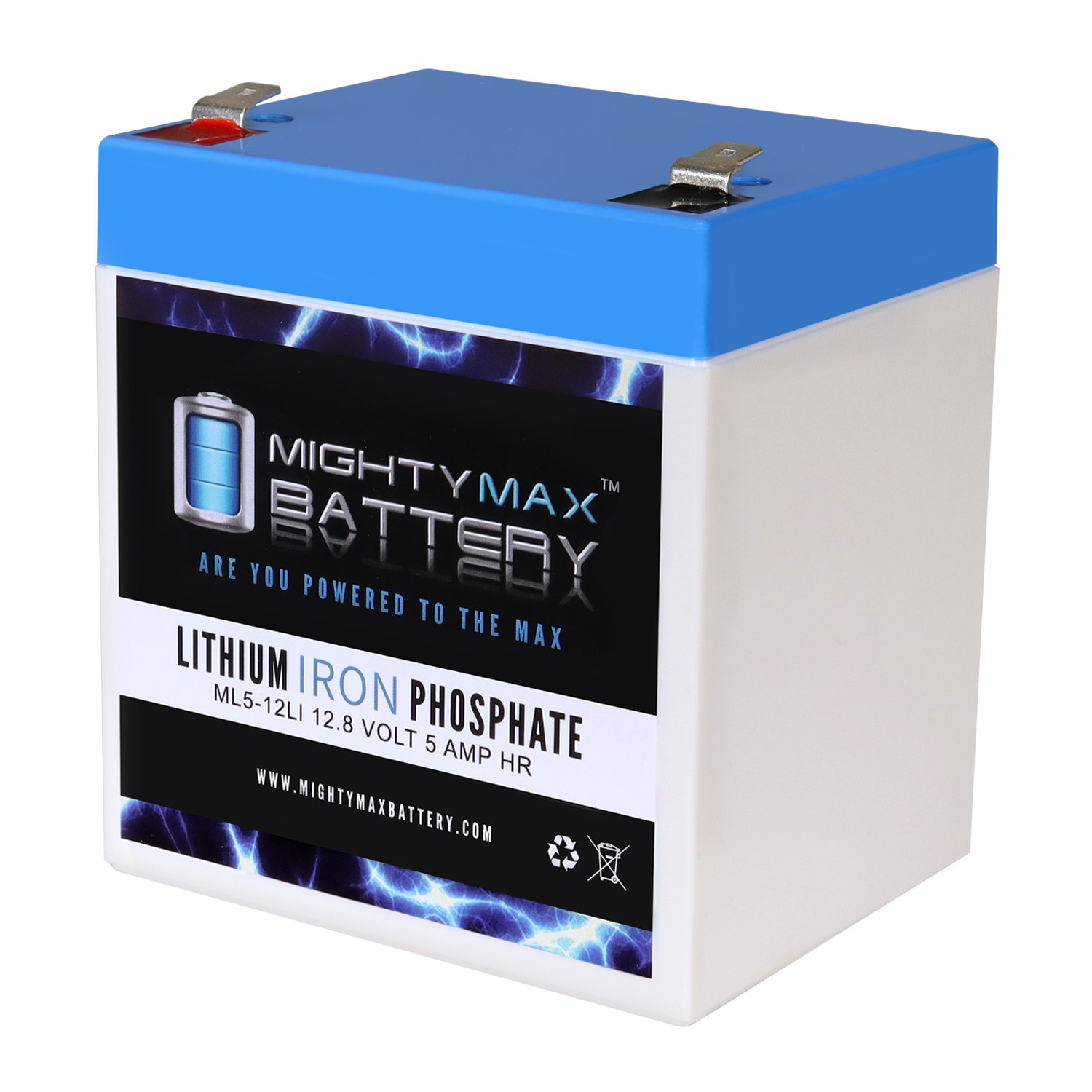
MOD Upgrading the ignition backup battery in a Carbon Cub E/FX-3 (EarthX ETX104)

Welcome to Flightinfo.com

  • Register now and join the discussion
  • Modern secure site, no 3rd party apps required
  • Invite your friends
  • Share the passion of aviation
  • Friendliest aviation community on the web
I pulled the EMERG IGN breaker and my volts went to 0.

Please study the switch schematic. You either have a serious problem with you emergency ignition configuration or CubCrafters has changed the circuit design.

Have you successfully run the emergency ignition test with ignition switch on R ONLY? If so, what did IGN VOLTS read?
 
Please study the switch schematic. You either have a serious problem with you emergency ignition configuration or CubCrafters has changed the circuit design.

Have you successfully run the emergency ignition test with ignition switch on R ONLY? If so, what did IGN VOLTS read?
I tested this in the prior ground run with no issues, expected results. There is a video at the bottom of this post that outlined that test if you want to observe.

My hunch has been all along since that test that yes, something is changed between yours and mine and whatever version of the schematic you have.

I hope to fly Sunday and will observe and test and report back after that flight. Was hoping to fly today but didn't make it.
 
Anyone else that wants to do this test and report your result let us know.
  1. Turn on MASTER, note your ignition battery voltage
  2. Pull the EMERG IGN breaker below the on/off switch. Note the ignition battery voltage. Does it remain the same or drop to 0?
 
Since you think your aircraft may be configured differently from the published CubCrafters schematic - would you please post the schematic that is applicable to your aircraft.
 
Since you think your aircraft may be configured differently from the published CubCrafters schematic - would you please post the schematic that is applicable to your aircraft.
I posted the schematics in the other MOD thread in this post.
 
I posted the schematics in the other MOD thread in this post.

That schematic is identical to the one I referenced.

It's not a complex schematic. Trace from battery + to switch (3), via jumper to switch (5), then via wire A11A20O to point [5].

Then refer to G3X schematic where you will find battery backup switch [5] feeding GEA 24 pin 28 VOLTS 2.

When you do that you will see that the ignition backup battery drives VOLTS 2 when the CB is pulled. Print it out and use a highlighter if you have any doubt.
 
I don't trust that the schematics in the AMM are well maintained, just like kit builders struggle with their manuals. I think at this point we just need to get some test data points for those that are willing to conduct a simple test. Correct my test below if I'm asking for something wrong:

For anyone willing to test, please do the following (as already asked before):
  1. Turn on MASTER
  2. Note ignition backup voltage reading
  3. Pull breaker below the emergency ignition on/off switch (leave switch in OFF position - do not change it)
  4. Note ignition backup voltage reading (same or drops to 0?)
Reply with test results including year of your build, i.e. mine is a 2023 FX-3.
 
That's a valid test but you may learn more by not turning MASTER On. IGN VOLTS should read ignition battery volts when only IBBS is on. Perhaps add that step to your test and report the result on your aircraft.
 
IGN VOLTS should read ignition battery volts when only IBBS is on. Perhaps add that step to your test and report the result on your aircraft.

I looked at the post-mod data log you had posted earlier. IGN VOLTS was 13.3 with IBBS only, stayed 13.3 with MASTER On, and increased to 13.7 with engine running. That all seems to be normal.

I do not yet know why your IGN VOLTS (VOLTS 2) behaves differently for [MASTER Off] vs [MASTER On with CB pulled]. The voltage at switch (4) and switch (5) should be the same for both cases.
 
I’ll do IBBS tests soon and report back.
 
Calling off all testers, no need for your test

So I went to the plane today to do some cleaning and tinkering. I then decided to run some tests again.

IBBS ON: Ignition battery did not show any volts. Hmmm, I know I've seen this show the volts before. This isn't right.

MASTER ON: Both starter and ignition backup rise to normal volts

Pull ignition breaker, ignition back to 0.

Check inline fuse - yep, it's separated.

I replaced the inline fuse with another 10A fuse and then IBBS ON and yep, I have volts again. So the schematic and @Cactus Charlie read is correct.

So now the question, what blew the inline fuse?

I don't know and it could be a number of things. I did briefly use the 10A Optimate charger. Did that blow it?

I did have some arcing when probing the battery with the voltmeter trying to get the amp reading. Did that cause it?

Was it the alternator pushing over 10A?

I don't know! The engine run was fine, I did the right ignition test although not 10 seconds, I just wanted to see if it worked and I did let the voltage stabilize before returning the R ignition back to normal.

At completion of the run I figured I better try the Optimate again and see if that does it. Nope, nothing blew the fuse this time. Could it have been the voltmeter? I don't know.

Moral is I don't know. The problem is you won't know...that the inline fuse it blown after MASTER is on. On IBBS on you'll know when the ignition backup volts reads 0.

I did a quick check of AC 43 to see if there is a remote option of putting a 15A inline fuse in place just for momentary surge during charge after engine start before power stabilizes. No, the 18 awg wire max is 10A so that thought is out even know I knew it really wasn't an option.

I have the TCW items in my cart at Aircraft Spruce. It's a little cheaper there and I need a few other things.

Thoughts????

Edit: I really would like to know the amps flowing. I'm thinking of getting something like this:


Edit: I ordered the above item and will consider installing it tomorrow. It arrives in the morning.
 
Last edited:
I was betting on the fuse being blown until I reviewed your post-mod log. At that time ( 12/28/2025 19:57 UTC) the fuse was not blown because you did have VOLTS 2 present with IBBS only.

Early in this thread I cautioned that, if the fuse blew due to charge current after running the ignition test, you would not know you had no backup ignition. Maybe that risk seems more realistic now.

Thanks for the last piece of the puzzle. The bits I had didn't fit together.

That Amazon Hall effect current sensor will likely provide useful data but, if you have a spare GEA 24 GP port, a fully integrated Hall sensor, such as I have for ignition battery current, would be a much better solution.
 
Maybe that risk seems more realistic now.
Yes, it does, which is why I have the TCW in my cart at AircraftSpruce. I'd love to get your help and opinion on wiring the TCW option up.
 
I'm looking at alternative LiFePO4 battery options in the 4 AH capacity range. There is nothing special about LiFePO4 batteries and there is no need to take an EarthX brand as the only option. I don't know why EarthX rates this small battery at a 15A max charge rate, it appears in my initial search and also query to chatGPT this is very unusual for this small of a capacity of battery. Right now I'm researching options. Seems most 4 AH LiFePO4 batteries have very low charge rates along the lines of the TCW IBBS and other EarthX option that competes with TCW.

I'll post more when I learn more.
 
For now I’m staying with what I have and need metrics. I want to see the charge rates and see how things go. The right panel will remain off for a while.
 
One of the thoughts was we wouldn't know if the inline fuse is blown. I think we discovered, and I need to verify, that pulling the emerg ign CB will drop the ign backup volts to 0 which is the indicator the inline fuse is blown.

I received the hall effect sensor device and will install today to get metrics and see what's really passing.
 
If I abandon the EarthX option I'll likely go back to the PowerSonic original factory setup. I'm not sure I'm up for rewiring and engineering the TCW 3AH option. I just ordered a NOCO pigtail that I'll wire in with the PowerSonic option should I restore the factory design so that I can plug a NOCO charger into the ignition backup battery via pigtail and maintain it to ensure a full charge when returning from a long period of non flying.

 
Installed the Hall effect sensor to monitor amp flow. Works great. Engine start was 1.4 amps. It stayed there about the entire time. After warmup I did a 10-15 sec right ignition test trying to effect some discharge on the battery and get a rise in amps after but it remained between 1.2 and 1.4 amps. The amps on the G3X showed 2. The starter battery was recently charged. Amps on the G3X spiked to 19 after start and then settled back down. That was all starter battery. Normal ops there.

I pulled the emergency ignition breaker and the sensor showed 0 amps which is correct (no charge current). Reset breaker and amps back to 1.4. Verified sensor was reading properly and not showing a bogus value.

I believe the inline fuse blew from me poking around with voltmeter which was in 10A mode trying to read amps.

I turned on IBBS after getting back in the hangar and ignition b/u volts was correct and reading.

I’m staying with the EarthX and calling this project complete.

I did wire in the sensor so I can connect to it over the panel when reinstalled using longer wires. I’ll bundle and zip tie under the panel when no longer in use.

Good lessons learned from this exercise such as how to know the inline fuse is blown. Learning systems is important and something most of us lack due to minimal manuals and education. This site and those participating have been great to learn from.
 
I saw no negative amps anywhere in that report. If there was never any negative amps there would not be a recovery charging current. Sign of the battery current should have changed from positive to negative during the run-up test.

Does this meter indicate the sign of current?
 
I saw no negative amps anywhere in that report. If there was never any negative amps there would not be a recovery charging current. Sign of the battery current should have changed from positive to negative during the run-up test.

Does this meter indicate the sign of current?
It shows a symbol at the bottom right. It's small and I didn't look for it. I'll check next time. I recorded it on a GoPro which I left in the plane and I can review that as well next time at the plane.
 
@Neal - I called the EarthX technical support line about the charging current of the ETX series, and they pointed me to a page on their site that I had not found - Dual Bus Lithium Battery Design, which details the exact scenario that you are working on with the "drop-in" replacement of the PowerSonic AGM backup battery with the EarthX ETX-104. The conclusion is that there is only a possible charging current issue in the rare case that the backup battery is deeply discharged, which is not a normal operational scenario for a backup battery.

A charging current issue exists with the main starter battery (e.g., ETX-900). If the battery is deeply discharged, the charging current can overload the alternator, tripping the field breaker. If this happens, then an external charge will be required before use. However, this is rare: if the battery charging current exceeds the alternator's capacity, the main bus voltage will drop, slowing the charging current, which is voltage dependent, and reducing the field voltage, which then reduces the alternator current, helping prevent thermal overload of the alternator. Given that the electronic ignition and Garmin avionics can all operate at 10.5V (a deeply discharged battery), they should remain functional while the battery charges.
 
Thanks for the info. There's been a lot of learning and a lot of good info share over the recent weeks such as in my case how to identify the inline fuse is blown should an overcurrent situation occur. I'm happy to have the hall effect sensor in place so I can further study the amp draw inbound and outbound during the tests which I still need to do as I haven't been to the plane this week. I certainly like the EarthX as a drop-in replacement and look forward to further testing and I'll share more info as soon as I can do more testing.
 
The conclusion is that there is only a possible charging current issue in the rare case that the backup battery is deeply discharged, which is not a normal operational scenario for a backup battery.

I disagree. If the emergency ignition battery is used in flight it is quite likely to be deeply discharged.

If, perhaps after landing, the reason for needing the emergency battery is rectified if should be possible to re-charge the emergency ignition battery with the alternator without blowing the fuse or toasting the blocking diode.

I would not fit that battery unless I had that assurance. There is no high charging current issue with the TCW 3AH IBBS which is still my preferred solution.

Now someone is going to tell me I should fit a pigtail and use a charger. I can't plug in a charger if I made a precautionary landing in the boonies!
 
I would like to have an EarthX backup battery as requested that will not exceed the circuit design. I hope @earthxbatteries can come through for us.
 
I would like to have an EarthX backup battery as requested that will not exceed the circuit design. I hope @earthxbatteries can come through for us.
The issue with charging current is due to the lower internal resistance of Lithium-based batteries vs Lead-based batteries, not to the battery's capacity.

In the case of the Carbon Cub ignition backup battery, the diode in the current charging circuit likely has sufficient voltage drop to limit the maximum charging current (no charging current data has been released to calculate it, so it would need to be tested in practice). If not, it is simple to add another diode or a series resistor to limit the charging current.
 
I disagree. If the emergency ignition battery is used in flight it is quite likely to be deeply discharged.
In the case of an in-flight emergency depleting the battery, I see two steps: a field recovery of the aircraft (normally requires a 4WD, another plane, etc. that will have access to charging power), followed by an extensive IRAN performed on my Cub, which would include charging the battery with an external charger and load testing to validate the capacity as per the maintenance instructions.

If, perhaps after landing, the reason for needing the emergency battery is rectified if should be possible to re-charge the emergency ignition battery with the alternator without blowing the fuse or toasting the blocking diode.
If I had discharged the emergency ignition battery, I would also have discharged the starter main battery, as I mentioned above, so I would need an external charge. As far as "toasting" the blocking diode, it is simple to just add a series resistor to limit the charge current in the current circuit.

I would not fit that battery unless I had that assurance. There is no high charging current issue with the TCW 3AH IBBS which is still my preferred solution.
I am personally with you on this, there are many advantages to the IBBS/EBBS concept, so I will be removing the current PowerSonic battery and connecting the ignition to the current IBBS 3Ah when I next have access to a maintenance hangar. I am also continuing my project to re-imagine the electrical system based on dual generators, an EBBS, and a deep-cycle accessory battery.

Now someone is going to tell me I should fit a pigtail and use a charger. I can't plug in a charger if I made a precautionary landing in the boonies!
A small, portable solar cell and charger will mitigate that problem and power the Starlink Mini, which you need to access advice on how to fix the issue causing the precautionary landing. Or if you are planning to use a jump pack to power the electronic ignition to get started again, many jump packs have a USB charging port that would work well for recharging the battery.
 
I may be wrong on this but if you land and have depleted your ignition backup and as stated above you've depleted your starter battery, you're not going anywhere. I believe the starter battery will require a BMS reset which requires a charger like the Optimate to perform.

Regardless, none of this replaces the need for a proper battery for the task and my request to EarthX remains and we can't say the ETX-104 is the right solution as it is. The risk may be low but I'd rather have the risk zero and never have to worry about it.

I hope none of us ever have to use our ignition backup battery.
 
I disagree. If the emergency ignition battery is used in flight it is quite likely to be deeply discharged.

If, perhaps after landing, the reason for needing the emergency battery is rectified if should be possible to re-charge the emergency ignition battery with the alternator without blowing the fuse or toasting the blocking diode.

I would not fit that battery unless I had that assurance. There is no high charging current issue with the TCW 3AH IBBS which is still my preferred solution.

Now someone is going to tell me I should fit a pigtail and use a charger. I can't plug in a charger if I made a precautionary landing in the boonies!
Let's discuss this a little further @Cactus Charlie. I contemplated moving this discussion out of this thread but I'll leave it for now.

Let's say you end up needing your backup ignition, let's say you're using the factory setup so you have your AGM. It's 6 months old. You lost your alternator, now you've depleted your starter battery and you had to fail over to your ignition backup. You used it for approximately 15 minutes and landed safely on a desert area and avoid all of the pretty cactus.

What are you going to do? You have a depleted starter battery, maybe you have a jump pack and can get the engine going again. Let's assume you fixed the alternator issue. But you just had to rely on your ignition backup and it is NOT recharged. Are you really going to fly this plane knowing you're ignition backup is now compromised? You have no way of charging it, nor your starter battery.

This scenario now makes me think of carrying my optimate charger in my aft cargo as it usually remains in the hangar. I may have to have someone fly out or drive out a generator so I can get 120V power and charge both batteries but in my situation I do have a pigtail on both the starter and ignition backup battery.

What would you do (WWYD) is an interesting scenario to think through on this one. What state of batteries are you going to fly out of this with?
 

Latest resources

Back
Top Bottom