Welcome to Flightinfo.com

  • Register now and join the discussion
  • Friendliest aviation Ccmmunity on the web
  • Modern site for PC's, Phones, Tablets - no 3rd party apps required
  • Ask questions, help others, promote aviation
  • Share the passion for aviation
  • Invite everyone to Flightinfo.com and let's have fun

MOD Upgrading the ignition backup battery in a Carbon Cub E/FX-3 (EarthX ETX104)

Welcome to Flightinfo.com

  • Register now and join the discussion
  • Modern secure site, no 3rd party apps required
  • Invite your friends
  • Share the passion of aviation
  • Friendliest aviation community on the web
I pulled the EMERG IGN breaker and my volts went to 0.

Please study the switch schematic. You either have a serious problem with you emergency ignition configuration or CubCrafters has changed the circuit design.

Have you successfully run the emergency ignition test with ignition switch on R ONLY? If so, what did IGN VOLTS read?
 
Please study the switch schematic. You either have a serious problem with you emergency ignition configuration or CubCrafters has changed the circuit design.

Have you successfully run the emergency ignition test with ignition switch on R ONLY? If so, what did IGN VOLTS read?
I tested this in the prior ground run with no issues, expected results. There is a video at the bottom of this post that outlined that test if you want to observe.

My hunch has been all along since that test that yes, something is changed between yours and mine and whatever version of the schematic you have.

I hope to fly Sunday and will observe and test and report back after that flight. Was hoping to fly today but didn't make it.
 
Anyone else that wants to do this test and report your result let us know.
  1. Turn on MASTER, note your ignition battery voltage
  2. Pull the EMERG IGN breaker below the on/off switch. Note the ignition battery voltage. Does it remain the same or drop to 0?
 
Since you think your aircraft may be configured differently from the published CubCrafters schematic - would you please post the schematic that is applicable to your aircraft.
 
Since you think your aircraft may be configured differently from the published CubCrafters schematic - would you please post the schematic that is applicable to your aircraft.
I posted the schematics in the other MOD thread in this post.
 
I posted the schematics in the other MOD thread in this post.

That schematic is identical to the one I referenced.

It's not a complex schematic. Trace from battery + to switch (3), via jumper to switch (5), then via wire A11A20O to point [5].

Then refer to G3X schematic where you will find battery backup switch [5] feeding GEA 24 pin 28 VOLTS 2.

When you do that you will see that the ignition backup battery drives VOLTS 2 when the CB is pulled. Print it out and use a highlighter if you have any doubt.
 
I don't trust that the schematics in the AMM are well maintained, just like kit builders struggle with their manuals. I think at this point we just need to get some test data points for those that are willing to conduct a simple test. Correct my test below if I'm asking for something wrong:

For anyone willing to test, please do the following (as already asked before):
  1. Turn on MASTER
  2. Note ignition backup voltage reading
  3. Pull breaker below the emergency ignition on/off switch (leave switch in OFF position - do not change it)
  4. Note ignition backup voltage reading (same or drops to 0?)
Reply with test results including year of your build, i.e. mine is a 2023 FX-3.
 
That's a valid test but you may learn more by not turning MASTER On. IGN VOLTS should read ignition battery volts when only IBBS is on. Perhaps add that step to your test and report the result on your aircraft.
 
IGN VOLTS should read ignition battery volts when only IBBS is on. Perhaps add that step to your test and report the result on your aircraft.

I looked at the post-mod data log you had posted earlier. IGN VOLTS was 13.3 with IBBS only, stayed 13.3 with MASTER On, and increased to 13.7 with engine running. That all seems to be normal.

I do not yet know why your IGN VOLTS (VOLTS 2) behaves differently for [MASTER Off] vs [MASTER On with CB pulled]. The voltage at switch (4) and switch (5) should be the same for both cases.
 
Calling off all testers, no need for your test

So I went to the plane today to do some cleaning and tinkering. I then decided to run some tests again.

IBBS ON: Ignition battery did not show any volts. Hmmm, I know I've seen this show the volts before. This isn't right.

MASTER ON: Both starter and ignition backup rise to normal volts

Pull ignition breaker, ignition back to 0.

Check inline fuse - yep, it's separated.

I replaced the inline fuse with another 10A fuse and then IBBS ON and yep, I have volts again. So the schematic and @Cactus Charlie read is correct.

So now the question, what blew the inline fuse?

I don't know and it could be a number of things. I did briefly use the 10A Optimate charger. Did that blow it?

I did have some arcing when probing the battery with the voltmeter trying to get the amp reading. Did that cause it?

Was it the alternator pushing over 10A?

I don't know! The engine run was fine, I did the right ignition test although not 10 seconds, I just wanted to see if it worked and I did let the voltage stabilize before returning the R ignition back to normal.

At completion of the run I figured I better try the Optimate again and see if that does it. Nope, nothing blew the fuse this time. Could it have been the voltmeter? I don't know.

Moral is I don't know. The problem is you won't know...that the inline fuse it blown after MASTER is on. On IBBS on you'll know when the ignition backup volts reads 0.

I did a quick check of AC 43 to see if there is a remote option of putting a 15A inline fuse in place just for momentary surge during charge after engine start before power stabilizes. No, the 18 awg wire max is 10A so that thought is out even know I knew it really wasn't an option.

I have the TCW items in my cart at Aircraft Spruce. It's a little cheaper there and I need a few other things.

Thoughts????

Edit: I really would like to know the amps flowing. I'm thinking of getting something like this:


Edit: I ordered the above item and will consider installing it tomorrow. It arrives in the morning.
 
Last edited:
I was betting on the fuse being blown until I reviewed your post-mod log. At that time ( 12/28/2025 19:57 UTC) the fuse was not blown because you did have VOLTS 2 present with IBBS only.

Early in this thread I cautioned that, if the fuse blew due to charge current after running the ignition test, you would not know you had no backup ignition. Maybe that risk seems more realistic now.

Thanks for the last piece of the puzzle. The bits I had didn't fit together.

That Amazon Hall effect current sensor will likely provide useful data but, if you have a spare GEA 24 GP port, a fully integrated Hall sensor, such as I have for ignition battery current, would be a much better solution.
 
Maybe that risk seems more realistic now.
Yes, it does, which is why I have the TCW in my cart at AircraftSpruce. I'd love to get your help and opinion on wiring the TCW option up.
 
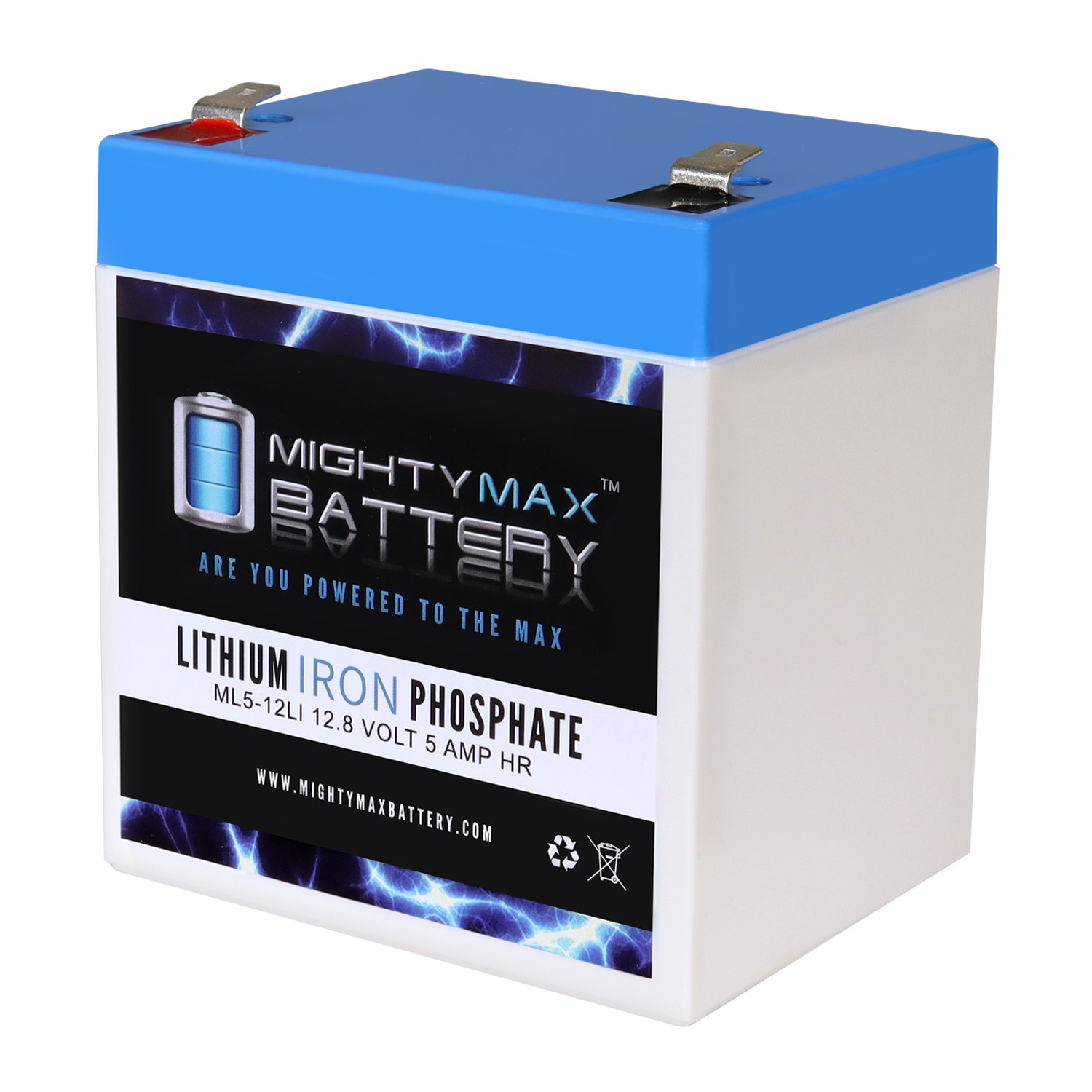
I'm looking at alternative LiFePO4 battery options in the 4 AH capacity range. There is nothing special about LiFePO4 batteries and there is no need to take an EarthX brand as the only option. I don't know why EarthX rates this small battery at a 15A max charge rate, it appears in my initial search and also query to chatGPT this is very unusual for this small of a capacity of battery. Right now I'm researching options. Seems most 4 AH LiFePO4 batteries have very low charge rates along the lines of the TCW IBBS and other EarthX option that competes with TCW.

I'll post more when I learn more.
 

Latest resources

Back
Top Bottom