Welcome to Flightinfo.com

  • Register now and join the discussion
  • Friendliest aviation Ccmmunity on the web
  • Modern site for PC's, Phones, Tablets - no 3rd party apps required
  • Ask questions, help others, promote aviation
  • Share the passion for aviation
  • Invite everyone to Flightinfo.com and let's have fun

FYI Travel chocks

Welcome to Flightinfo.com

  • Register now and join the discussion
  • Modern secure site, no 3rd party apps required
  • Invite your friends
  • Share the passion of aviation
  • Friendliest aviation community on the web

Neal

Forums Chief Pilot
Staff member
Joined
Oct 31, 1996
Posts
1,568
Type aircraft owned
Carbon Cub FX-3
Base airport
KFCI
Ratings
COMM, IFR, MEL, SEL
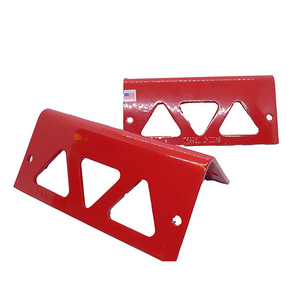
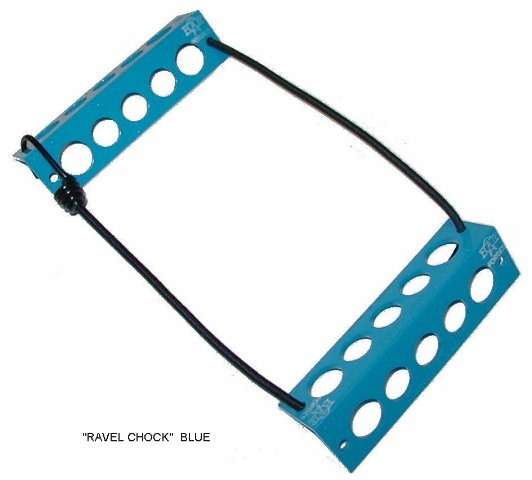
It was great to meet @ve6yeq as he dropped in on his way north bound. Many things learned in our info share while here but one thing I liked that he had was Travel Chocks. Something I need as I considered how to travel with chocks as mine are heavy rubber compound type and the wood ones that were left in my hangar from the prior tenant are more for Cessna's. So these arrived (large/red) and will answer the need perfectly.
travel-chocks.png


Thanks Craig!
 
One of the reviews gave 4 stars and this comment - "Was loading the plane onto my tug and it pushed the tires onto and flattened out the chock."

Why would anyone give 4 stars to a chock that can be flattened by the wheel it was intended to chock?

At remote strips I usually chock with rocks. Usually a lot to choose from but I have a pet pair at one strip I visit frequently.

Long term at paved airports it's in the hangar or tied down. Short term I set the brakes if it's windy.
 
Probably bought wrong size. These are hefty yet not too heavy.

My typical plan is brake set on one side so the plane turns and not nose over.

Hangar preferred if overnight and available. Tie down too but for a fly-in type situation these will help.
 
My typical plan is brake set on one side so the plane turns and not nose over.

How would that work?

In a strong wind with no tie downs available I park tail into the wind and trim full nose down. That lowers the elevator and stab so the tail is pushed down.

Both brakes are set since, if the aircraft rotates, the wind can get under a wing and flip the aircraft on its back (a roll-over not a nose-over).
 
Main concern is prop or jet blast.

How would either cause a nose-over and how would locking one wheel mitigate the risk?

Perhaps a couple of diagrams showing the blast direction and the aircraft position before and after rotation would help.
 
Never had a Travel Chock brand product collapse. Are you sure this is the brand your friend was talking about, Cactus Charlie?

These are what I recommend for onboard equipment to new aircraft owners. They are strong, durable, light and stack to pack small.

Neal, the size you selected is suitable for tundra tires. The smaller size works well on the 8.00 x 4 tires on our PA-11.

Can't say I like the idea of chocking one main wheel so the airplane can pivot. If there is a chance the airplane will be subject to jet blast of surface wind, I tie it down securely with no slack in the ropes.
 
If no tie down and no chocks it was what was suggested to me by TacAero and makes sense to lock one wheel (parking brake).
 
If no tie down and no chocks it was what was suggested to me by TacAero and makes sense to lock one wheel (parking brake).

If you understood what you were told you could draw the diagram. If not, then maybe your instructor at TacAero can help with that. Maybe I'll learn something new.
 
CC, that was a failure in reading comprehension on my part. The comment on the collapsing chock was from a reviewer of Travel Chocks specifically.

Neal, I understand the theory of allowing the airplane to weathervane into the wind, by locking one main wheel.
But to my mind that action would still leave the airplane unsecured and subject to upset by jet blast or high wind. Another consideration is that most large fly-ins require the airplane to be tied down as soon as the airplane is parked. This includes Airventure, Sun-N-Fun, and even the Sentimental Journey fly-in.
 
Yes, I get that, but how many of us for a fuel stop or lunch stop, etc. don't tie down if there are no surface contacts to tie to? So we then resort to parking brake(s) if you don't have chocks. Now with travel chocks, if carried, it could help in that situation. I also carry these tie boss lightweight ropes/latches which are in my cargo pod as well as my screw tie downs.

Decisions and options. Brakes, chocks, tie down. We all know, tie down if you can, chock if you can, last resort brakes if needed.

We all digress...the large travel chocks seem to fit the bill I was missing of not wanting to haul my heavy rubber chocks that I use in the hangar. A good thing learned from a fellow cub owner. A nice thing to have for cross-country and fly-in use. They'll stay in my cargo pod. If I had to put it down in a field somewhere I'd like to tie it down/chock it when left unattended.

Click here for what I use for tie downs for those in need of something.
 
I do leave my even lighter airplane with just chocks in place while I go to lunch provided;
1) Current and forecast surface wind is less than 10 knots.
2) No convective activity is evident or forecast.
3) It is not parked near the fuel pumps or in an area subject to jet blast and rotor wash.

If I need to tie the airplane down, I always carry three lengths of 5/8' nylon rope in the airplane. I have a "The Claw" full tie down kit but only carry it if headed for an airshow, camping, or on multi day long trips.
 

Latest resources

Back
Top Bottom






