Welcome to Flightinfo.com

  • Register now and join the discussion
  • Friendliest aviation Ccmmunity on the web
  • Modern site for PC's, Phones, Tablets - no 3rd party apps required
  • Ask questions, help others, promote aviation
  • Share the passion for aviation
  • Invite everyone to Flightinfo.com and let's have fun

Choosing an ignition backup battery for an electronic ignition piston aircraft engine

Welcome to Flightinfo.com

  • Register now and join the discussion
  • Modern secure site, no 3rd party apps required
  • Invite your friends
  • Share the passion of aviation
  • Friendliest aviation community on the web
The voltage plot may be misleading. Voltage sampling started when the load was connected. There is no record of the unloaded battery voltage.

This was the original battery fitted by CubCrafters and the aircraft first flew May 2020. As I have said before I change the ignition battery on condition and test it at runup.

This battery looked very good when in-flight tested but had significantly deteriorated since then. I have all the test data but I'm not going to dig it out now.

Here is in flight test data (ignore the Amps legend that plot was removed):

in flight ign test.PNG
 
No need to go back for anything. Was just an observation. Most of us only see the charge voltage and don’t know the actual state of the battery. Last night I showed 12.5 prior to start. 13.7 with engine running. Drain down to 12.1 during right ignition backup test and I waited to see where it would stabilize. Realizing plane has been sitting for two weeks.
 
Here is the history for that battery. Just had to open the file and capture the image -

PS-1221S test history.PNG
 
Slightly adjacent (but related) question. @Neal was swapping your main battery for the EarthX a fairly easy install? What model battery did you choose?
 
Slightly adjacent (but related) question. @Neal was swapping your main battery for the EarthX a fairly easy install? What model battery did you choose?
Yes. I went with the ETX-90 non vented (from memory). I have a post here if you search on EarthX. EarthX now sells an adapter that connects to the lugs to make it easier to attach wires which I recently bought with the backup battery for future use. The hardest thing with the starter battery no matter the type is the tight space.

If I did it over again I’d consider a vented option and just run a silicone tube that connects to a fitting on the inspection plate near the aft right fuel sump. It wouldn’t be hard to fish that tube I don’t think.
 
That sounds better. I’m on my phone at the moment. One of the other members mentioned the ETX-1200. I’d measure and see the highest capacity that fits.
 
I'm back at the computer, here is my thread on the EarthX I installed. Feel free to add to the thread as you wish as it's more fitting than this one.

 
Using the ETX 1200 is the way to go - it fits with little Room to spare but will definitely help if you have an alternator failure
The EarthX ETX series batteries are optimized for peak current rather than energy storage capacity. The ETX 1200 has about 20 Ah (at 10 A draw) compared to the ETX 900, which is about 15.6 Ah at a similar current draw. So, only a 28% improvement in capacity as compared to the 50% increase in CCA (cold crank amps).

There is also the ETX 1600 battery, which is 32 Ah capacity (twice the ETX 900), but it is slightly wider, so I will have to measure the space under the seat...

I think that updating the IBBS 3 Ah to an EBBS 8 Ah might be a better option to add 5 Ah while removing the current weak spot of the AGM ignition backup battery.
 
I'm seriously considering swapping out my EarthX ETX900VNT with an ETX1200. Issue is that EarthX does not make the 1200 with a vent option. In my CCX-2300 where the battery is installed in the aft avionics bay, is this really an issue? There is plenty of room back there and the cabin of the plane is not sealed / insulated. @Neal also confirming that you use the ETX900VNT vented battery in your plane, correct?
 
Please don't enable me. I want to upgrade to the 1200 but don't see that it's necessary haha. The struggle is real! I'm waiting for my 900 to show even the slightest degradation so I can break out the credit card :)

No, I do NOT use the vented version and I'm not concerned. Master off, windows open, if something were to occur. It's probably a requirement for certified aircraft for worst case scenarios. I'd certainly love to know if there are any stories of these having a thermal runaway and smoke issue. If a vented version were available I'd consider it only because that's what some install and think running a vent tube wouldn't be difficult.

The risk is probably the same as any other electrical fire scenario that would produce smoke. Installed properly, risk should be minimal.

I'm all on board in making my plane the safest I can make it and that involves improving batteries backing the electronic ignition our engine relies on. I see nothing wrong with the design by CubCrafters, I just see opportunity to make it better.
 
On final to KDVT yesterday and I was surprised (understatement) by a "VOLTAGE!" aural alert. My immediate reaction was that it could not be possible for me to have had an alternator failure and discharged the main battery without being aware of a problem. It took a few seconds to get past the denial and find the problem.

I had turned on emergency ignition instead of the fuel pump. My 2 AH AGM was close to replacement time and, since the alternator was actually charging, my conditional alerting was using the "on-charge" voltage levels. Problem resolved by turning off the emergency ignition and turning on the fuel pump.

My recollection is that I heard "Voltage" then "Ignition Volts" but the data log does not show two separate CAS alerts.

It got my attention.
 
Ignition battery drain peaked at 1.4 A at 2170 rpm and 11.5 V.
 
Wouldn’t it be nice if the backup ignition switch was just an arming feature? In fact how about removing it and the ignition fails over to the backup battery when voltage drops below a level? Sense alternator and starter battery voltage. When insufficient then engage backup ignition. Make the switch an override only. It should never need to be touched.
 
Wouldn’t it be nice if the backup ignition switch was just an arming feature? In fact how about removing it and the ignition fails over to the backup battery when voltage drops below a level? Sense alternator and starter battery voltage. When insufficient then engage backup ignition. Make the switch an override only. It should never need to be touched.

When I was designing my TCW IBBS installation that will, one day, replace my 2 AH AGM I considered 3 switch options:

OFF ARM
OFF ARM ON
OFF ON

I decided on OFF ON keeping the switch functionality the same as the CubCrafters design.

There were several reasons for this choice -

It keeps the existing switch and placard
It works the same as any other FX-3
It can be tested without needing a breaker pull
It keeps the same LED warning lamp and it is functional with Master off

An auto ARM function must be designed so there is no drain on the ignition power source when Master is off when not in flight. That pretty much forces a switch with an OFF position and a light to warn when On.
 
Last edited:
Please don't enable me. I want to upgrade to the 1200 but don't see that it's necessary haha.
OK, let's clear up any misunderstanding ... since when does something need to be "necessary" before we spend money on an airplane?
I'm waiting for my 900 to show even the slightest degradation so I can break out the credit card :)
Now this is the correct mindset.
Wouldn’t it be nice if the backup ignition switch was just an arming feature?
This is the way the CCX-2300 is designed. The (R) backup battery switch is a 3-position switch - off, auto and on. Auto is "armed" where so long as main bus voltage is normal, then it's my understanding that it "passes through" the (R) back-up IBBS unless and until main bus voltage drops below normal level. If that happens when the switch is in "auto," the (R) back-up IBBS automatically begins powering the (R) ignition and (L) ignition continues to be powered by the main bus / battery. Not sure if this can be designed into the FX-3 panel / system, but should be a simple question to investigate.
 
Not sure if this can be designed into the FX-3 panel / system, but should be a simple question to investigate.

I did investigate this option and decided against it. That does not mean it could not be done.
 
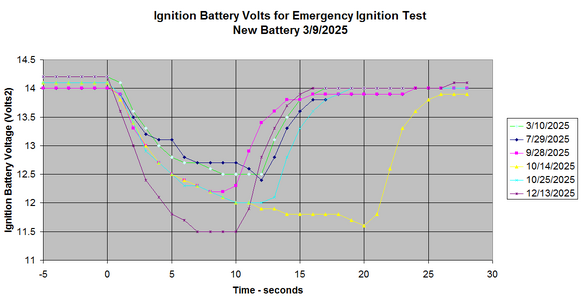
Another one bites the dust. This one, which was not PowerSonic, was useless after 9 months.
 

Attachments

  • 2 AH AGM new 3_9_25.PNG
    2 AH AGM new 3_9_25.PNG
    37.1 KB · Views: 12
Now imagine how many out there don't know that their ignition backup battery is bad. And how many aren't changing them annually? Yeah...scary. I need to get that forward right panel open and start working on my mod.
 
Going to be a warm(er) weekend here in VA. May be time to get the right forward panel off and look into my EarthX backup battery mod. Sitting on the shelf isn't doing much :)
 
Let us know how that goes. If you can get it to work, I will definitely consider it for my EX-3.

@Neal I'm sure you saw Pete's answer to my battery question posted on FB. I'm going to call EarthX to inquire if they plan to offer a vented version of the ETX1200.
 
I'm sure you saw Pete's answer to my battery question posted on FB. I'm going to call EarthX to inquire if they plan to offer a vented version of the ETX1200.
I did and I know they push the vented version and rightfully so, why not? It's up to each to consider the risk involved. I'm not concerned about my non vented 900. I also run LiFePO4 in my RV (motorhome) with no issues to date (2 years) and you also have LiFePO4 non vented for your IBBS battery and ignition backup battery (by TCW). Ensuring proper care and installation is key to success.

As to the comment about breathing the thermal runaway smoke/fumes whatever, I wonder how our breathing 100LL each time we fly compares. I imagine it's toxic yet we never think about that. Food for thought :)
 
Just spoke to technical support at EarthX and received a very interesting recommendation. Evidently, EarthX then looked at my FB post and responded. It's worth you taking a read. Bottom line is that the tech support represented said that they DO NOT recommend the ETX1200 unless its a last resort to solve a persistent hard starting problem. He went so far as to say that "the 1200 has too much starting power in many applications." He said that if additional starting power and amp-hour capacity is desired, that a second ETX900 in parallel is a much preferred option. Parallel installation of two batteries may work in the NX/XCub, but will presumably not work on the FX-3 based on where the battery is installed. From a cost / benefit perspective, as @Neal suggested it may be best to focus on bolstering the right ignition back-up battery and live with the reliability of one EarthX LiFePO4 main battery. THe tech rep I spoke to was not high on the ETX1200.
 
Credit card saved :)

I'm fine with a single 900. It's worked great to date. A better battery to support the backup ignition should be the objective. I'm going with the EarthX I bought but with the TCW / IBBS on the radar. Both are similar (LiFePO4) with different form factors.
 
Just spoke to technical support at EarthX and received a very interesting recommendation. Evidently, EarthX then looked at my FB post and responded. It's worth you taking a read. Bottom line is that the tech support represented said that they DO NOT recommend the ETX1200 unless its a last resort to solve a persistent hard starting problem. He went so far as to say that "the 1200 has too much starting power in many applications." He said that if additional starting power and amp-hour capacity is desired, that a second ETX900 in parallel is a much preferred option. Parallel installation of two batteries may work in the NX/XCub, but will presumably not work on the FX-3 based on where the battery is installed. From a cost / benefit perspective, as @Neal suggested it may be best to focus on bolstering the right ignition back-up battery and live with the reliability of one EarthX LiFePO4 main battery. THe tech rep I spoke to was not high on the ETX1200.
I read the post and had to find the jump pack that they carry which I was not aware of.


I carry a NOCO GB40 which I'll stick with. Compact and has a pigtail. Hope to never need it for my 900.
 
I carry a NOCO GB40 which I'll stick with. Compact and has a pigtail. Hope to never need it for my 900.
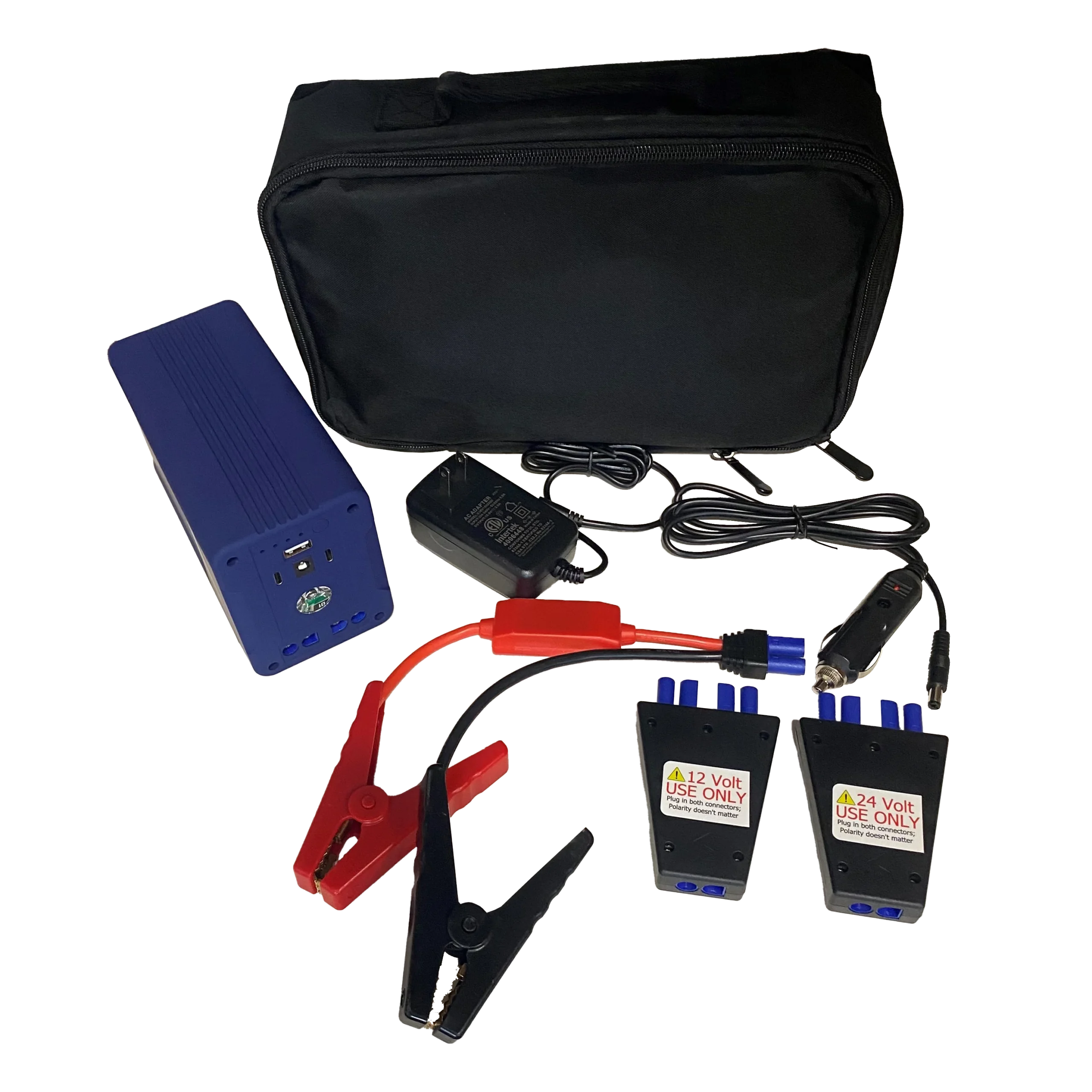
Their jump pack is too large and too expensive. I carry a very powerful Likithor LiFePO4 jump pack which I too hope to never need. I've had an avionics shop wire in a dedicated pigtail to facilitate easy access.
 
. I'm going with the EarthX I bought but with the TCW / IBBS on the radar. Both are similar (LiFePO4) with different form factors.

There is a big difference between the EarthX battery you have purchased and the TCW IBBS.

The TCW IBBS will keep the engine running when the voltage drops below 8 V. The EarthX will cut off at a much higher voltage (about 10.5 V). I do not know how much difference that is in terms of engine run time but I'd rather destructively discharge an IBBS battery pack ($150 ish) than have the engine stop and break the airplane ($100,000- $300,000).

Either will likely be far better than the existing 2 AH AGM but I have a strong preference for the 3 AH IBBS. The EarthX does have the advantage of much simpler installation. That may make it an attractive interim improvement.

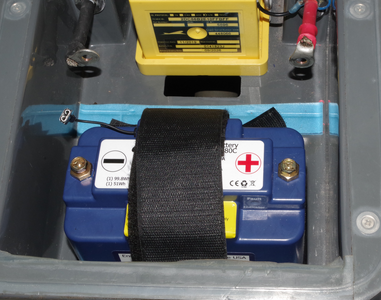
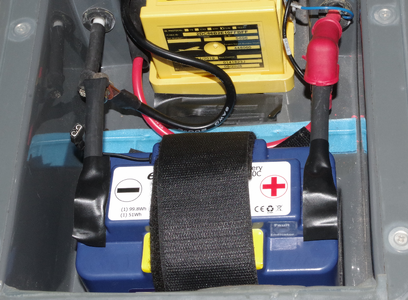
Since we are also talking about the main battery in this thread - I'm pleased with the performance of my ETX680C and have no reason to change to a larger battery.
 

Attachments

  • ETX680C in FX-3  -1.PNG
    ETX680C in FX-3 -1.PNG
    1.4 MB · Views: 16
  • ETX680C in FX-3  -2.PNG
    ETX680C in FX-3 -2.PNG
    1.1 MB · Views: 17
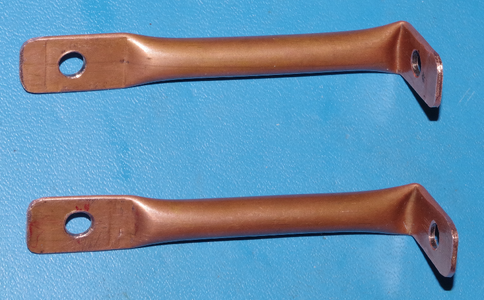
  • battery straps.PNG
    battery straps.PNG
    895.3 KB · Views: 14
What's involved in making a TCW IBBS work? I have no problem converting my EarthX to a Starlink Mini power source as I already bought the 12V to SL Mini converter as I knew it may end up this way. Not a big deal.

I may need to run a discharge test on the EarthX and validate that number. Seems odd. I believe I read the BMS will let it run down to about 10% state of charge remaining. That's closer to 10.0 V in a LiFePO4 battery, In fact I'm not sure a LiFePO4 battery goes below 10V. You may want to verify that 8V number.

I did a quick google search and it appears my info is accurate, 10.0V is the floor for LiFePO4.
 
You may want to verify that 8V number.

I did a quick google search and it appears my info is accurate, 10.0V is the floor for LiFePO4.

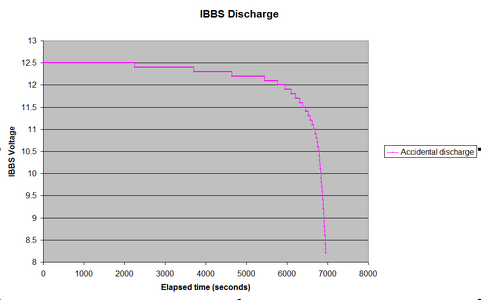
I have the full discharge plot for when I accidentally deep discharged my G3X IBBS. I don't need to verify anything.

G3X shutdown at 8.2 V but the ignition system would have continued to drain the IBBS. The time between 10.5 V and 8.2 V is 177 seconds or close to 3 minutes.

Faced with an imminent forced landing what would 3 minutes more engine run time be worth to you?
 

Attachments

  • IBBS accidental discharge.PNG
    IBBS accidental discharge.PNG
    14.4 KB · Views: 9

Latest resources

Back
Top Bottom